

When someone suggested I write about greenwashing, my first thought was that it sounded like something you do to a patio. It isn't. But it's something every one of us has fallen for at some point, usually while standing in a shop holding a bottle of "natural" shampoo and feeling quite pleased with ourselves.
Since EVA has "ethical" right there in the name, I think we owe you a proper answer.
So what actually is greenwashing?
Greenwashing is when a company makes itself sound more environmentally friendly than it really is. Sometimes it's a big fib. More often it's vagueness: a leafy logo, a word like "eco" or "green" with nothing behind it, or a claim about one tiny part of a product that makes the whole thing sound virtuous.
It doesn't need a villain, either. The UK regulator has been clear that greenwashing doesn't require intent. You can do it by accident, which is a bit of a worry for those of us who like a catchy slogan.
What just changed in Europe
This is timely, because the rules changed yesterday. The EU's Empowering Consumers for the Green Transition Directive was adopted in 2024, and it came into application on 27 September 2026. Every member state had to write it into their own law first.
In plain English, across the EU it's now prohibited to make generic environmental claims without proof, or to use sustainability labels you've made up yourself. So "eco-friendly", "green" or "kind to nature" no longer cut it unless the business can back them up. The rules also target claims based on offsetting. Saying a product has a neutral or reduced climate impact because emissions were offset is exactly the sort of thing they're aimed at. And it isn't only slogans: the Commission has said brand and product names can be treated as environmental claims too.
There's a related proposal you may have heard of, the Green Claims Directive, which would have required claims to be verified in advance. That one was not adopted, so this directive is the one with teeth right now.
And in the UK?
EVA is a UK based company although our community is truly gloabal. And while we're not in the EU, the UK hasn't been idle. Since April 2025 the Competition and Markets Authority can fine companies up to 10% of global turnover for misleading environmental claims, without having to go to court first. Their Green Claims Code boils down to this: be truthful, be clear, and have the evidence.
Right then. Does EVA do it?
I'd love to say a confident "no" and move on. But that would be a bit of a green claim in itself, wouldn't it?
So here's what I can tell you honestly. Every EVA trip includes hands-on volunteering, and our projects are built around needs the local community has identified, working with small NGOs and community groups. We keep our groups small. Those are things you can check and ask us about.
Here's what we don't do:
We don't call ourselves "eco-friendly" or "green". Flying halfway round the world isn't green, and I won't pretend it is. You have an option when you book to use carbon-offset, but we don't make any claims around that.
We don't promise you'll "save the reef" or "save the turtles". On our Bali trip you'll plant coral, help with turtle conservation and clear beaches. That's real, useful work alongside people who do it every day. But it's one contribution among many, and I'd rather tell you that than oversell it.
We try to be clear about where the money goes. In very broad terms, at least 100 dollars of your tour fee will be used on each project. It's often more than that and as we go forward there will be an EVA Volunteer Charitable Trust where all the information about the funding of projects will be available on the UK Charity Commission website. This has been a promise for a long time, but I've set up a meeting in December with someone who is going to help me over th finish line with it.
And what about the word "ethical"? The new rules are aimed at environmental claims, so as I understand it the word isn't strictly caught. But the spirit is the same. If we're going to put it on the front door, we should be able to show our working. That's why I keep writing about local partners and about the difference between volunteering and giving back.
Someone recently pointed out on one of the reviews that we use plastic bottles. I can't tell you how deeply I wish we could ban single use plastic, but the message is very slow getting out to hotels and suppliers. We really try to remove the single use toothbrushes, razors etc from the accommodations we use and we encourage everyone to bring a reusable water bottle. But when guests want chilled water in the middle of a jungle or a desert, it's not easy to magic it up, so some of our partners use SUP to keep the guests happy.
Hold us to it
My advice for spotting greenwashing, whoever's doing it, is to ask three questions:
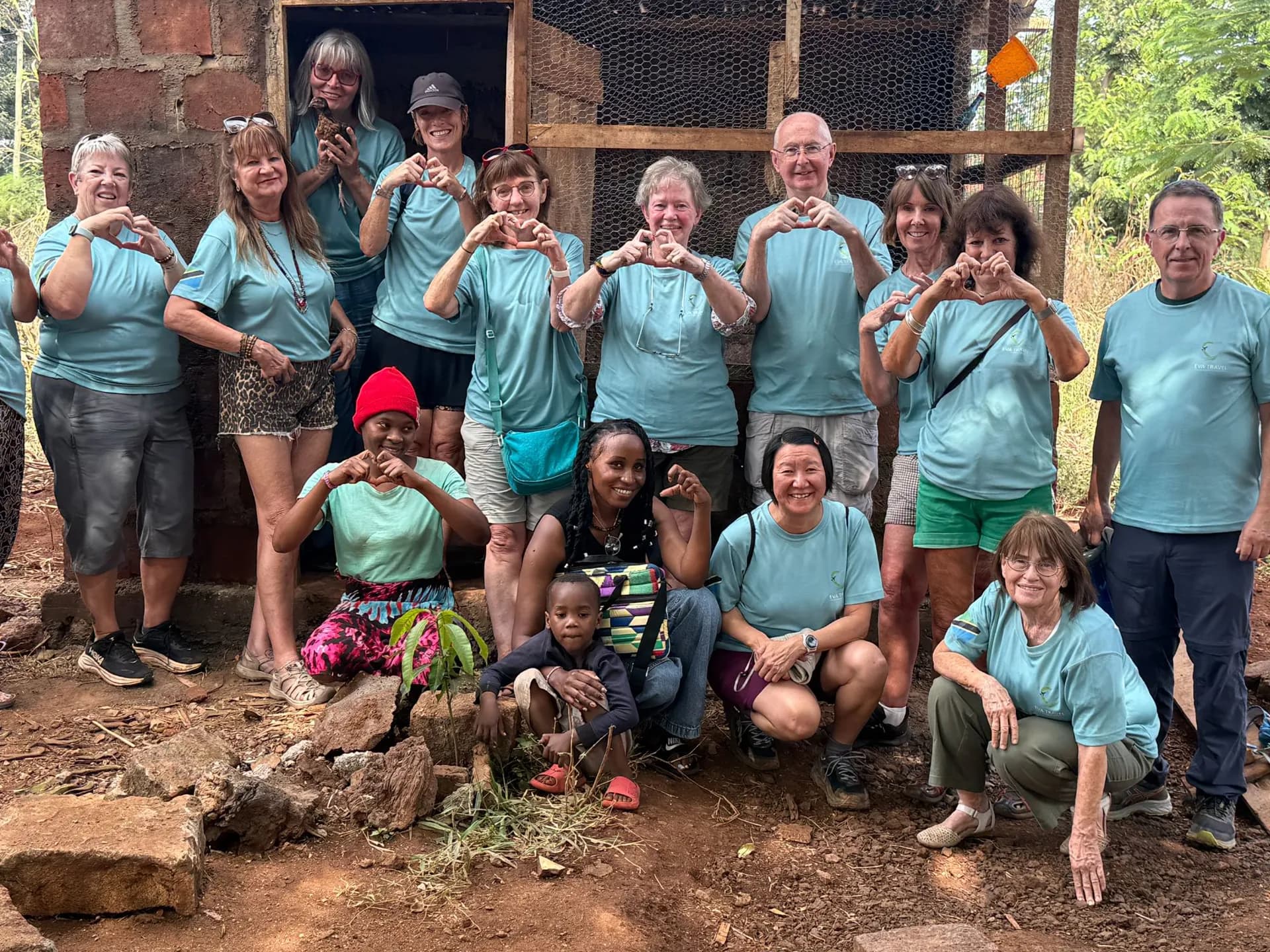
What exactly is being claimed? "Sustainable" isn't an answer. "We removed X tonnes of plastic from Y beach with Z organisation" is. Or indeed, we spent 3 days building a brick chicken house for a vulnerable family, supplied 30 chicks and feed and have arranged for follow up visits to be sure they are coping. This will help them on the path to a more sustainable lifestyle.
Who says so? A recognised certification or a named partner is worth more than a home-made badge. We're working on that part, but so far everything we are doing is in compliance with this new ruling.
What are they not telling me? Every trip, product and holiday has a footprint. Honest companies mention it and try to give you options. So the carbon offset is available, you're asked to bring water bottles and we try to use accommodation with minimal single use plastic.
Ask us those same questions any time. If you ever catch EVA waffling, tell me. I'd much rather hear it from you than from a regulator.
https://www.esgtoday.com/new-eu-anti-greenwashing-rules-enter-into-force/
Come as strangers, leave as friends, and please, leave every destination better than you found it.